
Why End-of-Line Packaging Automation Matters for Indian Manufacturers
Introduction
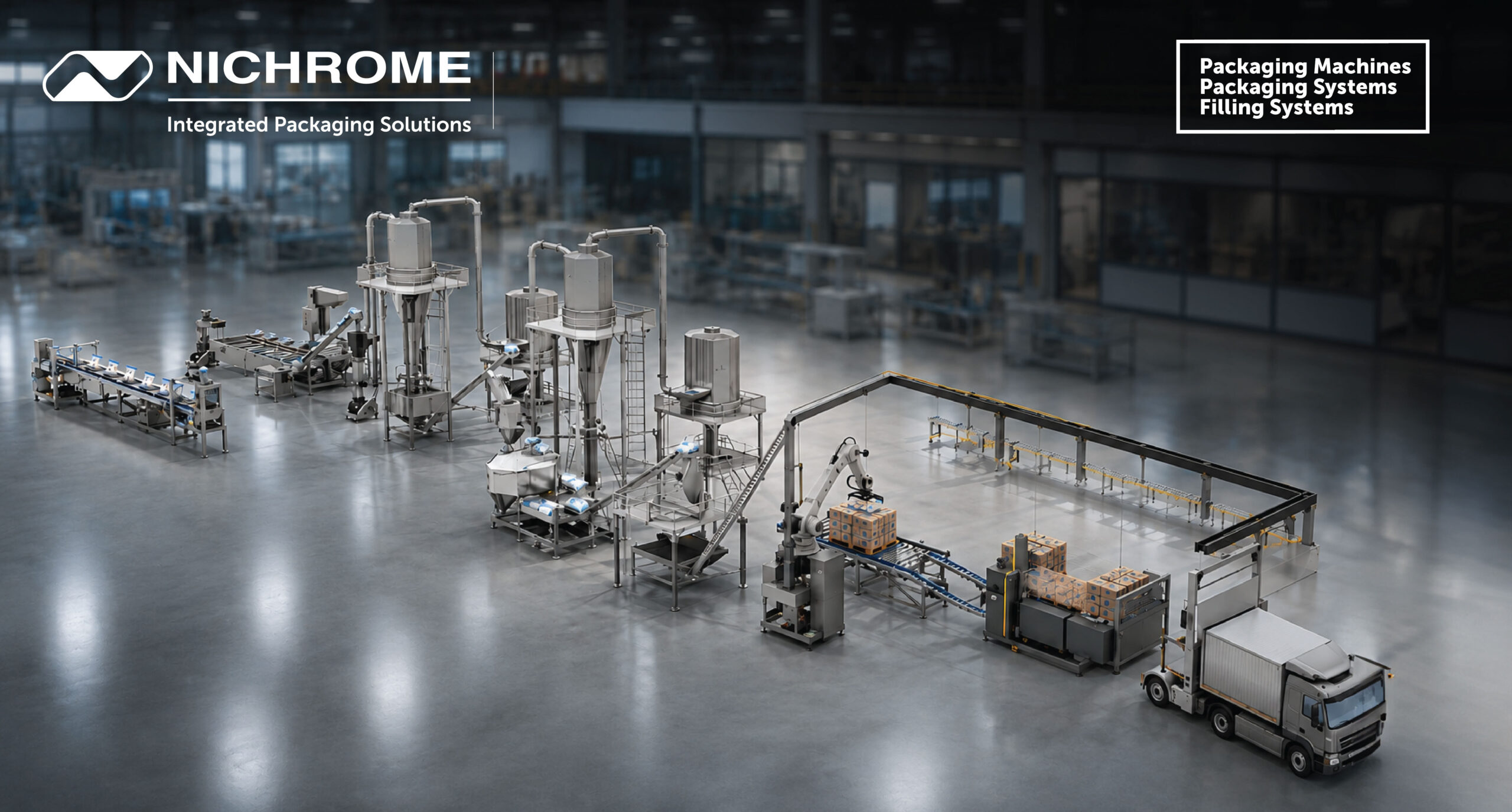
Every packaged product represents quality, safety, and trust, but its success depends on the final few meters of the production line. End-of-line packaging is the final stage covering case packing, cartoning, palletising, stretch wrapping, inspection, labelling and dispatch. It prepares products for warehouses, retailers and consumers.
Even advanced manufacturing loses efficiency if dispatch operations remain manual or disconnected. End-of-line packaging automation connects every stage, serving as the driving force behind faster operations, consistent quality and reliable deliveries across food, pharmaceutical and non-food industries. As Indian manufacturers adopt smarter production practices, companies like Nichrome deliver value by delivering integrated packaging ecosystems.
Understanding End-of-Line Packaging Automation
Rather than relying on standalone machines, end-of-line packaging automation coordinates multiple operations into a seamless system.
A typical integrated workflow includes:
- Conveyor systems
- Robotic pick-and-place units
- Case packers and cartoning systems
- Palletizers and stretch wrapping machines
- Inspection and barcode verification systems
- Automated dispatch handling
The goal is to deliver securely packed, correctly labelled and efficiently palletised products ready for transport with minimal manual intervention.
Why Indian Manufacturers Need End-of-Line Automation
Indian manufacturers face expanding product volumes, diverse packaging formats and shorter production cycles. Manual operations cause bottlenecks, labor dependency, packaging inconsistencies, high operational costs, product damage, shipping errors and low Overall Equipment Effectiveness (OEE). End-of-line packaging systems solve these challenges through:
- Improved Overall Productivity: Synchronized conveyors and robotic handling ensure continuous movement, higher throughput, reduced idle time, better line balancing and faster dispatch readiness.
- Consistent Packaging Quality: Automated systems eliminate human error, delivering uniform carton loading, accurate filling, stable pallet loads, reduced damage and better brand presentation which is crucial for export standards.
- Reduced Labour Dependency: Automation replaces repetitive physical labor, allowing employees to focus on high-value tasks like quality assurance, machine supervision and preventive maintenance.
- Warehouse and Logistics Readiness: Properly wrapped and palletised loads streamline inventory management, vehicle loading, container optimization and retail distribution while minimizing transit damage.
Industry-Specific Applications
1. Food Industry
High-volume food processing requires strict hygiene and rapid output. Automation optimizes packaging for snacks, ready-to-eat foods, dairy, frozen goods, bakery items, edible oils, spices and pulses. Automated case packing and palletising minimize direct handling, maintain food safety and scale capacity without proportional labor increases.
2. Pharmaceutical Industry
Demanding extreme precision and strict compliance, automated lines support pharmaceuticals through:
- Accurate case packing
- Barcode verification and batch tracking
- Carton and label verification
- Tamper-evident packaging
- Automated palletising
This ensures complete traceability and supply chain integrity.
3. Non-Food Industries
Sector applications include personal care, cosmetics, household chemicals, agrochemicals, lubricants, paints, consumer goods and electrical products. Flexible automation handles high speeds and changing carton sizes without operational disruptions.
Key Technological Drivers
- Robotic Automation: Pick-and-place robots, case loaders, and pallet builders offer superior speed, accuracy and workplace safety while lowering product damage.
- Industry 4.0 & Smart Manufacturing: Modern equipment incorporates machine connectivity, production monitoring, performance analytics, remote diagnostics and predictive maintenance. Digital reporting helps manufacturers address bottlenecks and optimize OEE.
The Power of Integrated Packaging Solutions
Operating disconnected machines from multiple suppliers creates communication gaps, synchronization failures and higher maintenance complexity. Integrated solutions ensure every machine functions within a unified workflow, maximizing production reliability and future scalability.
When choosing an automation partner, manufacturers must evaluate:
- Industry expertise
- Customization capabilities
- After-sales technical support
- Spare parts availability
- System scalability
Conclusion
End-of-line packaging automation has evolved from an operational upgrade into a strategic necessity. As Indian manufacturing shifts toward smart, connected production, automated case packing, palletising and robotic handling allow companies to lower costs, ensure product safety, and build scalable operations. With specialized partners like Nichrome, manufacturers can optimize their supply chain and deliver every pack with confidence.
Frequently Asked Question
It automates case packing, palletising, wrapping and dispatch preparation for faster, consistent packaging operations.
Food, pharmaceuticals, dairy, personal care, agrochemicals, chemicals, consumer goods and other manufacturing industries.
It reduces manual handling, eliminates bottlenecks, increases throughput and improves overall equipment effectiveness.
They synchronise multiple machines, ensuring seamless operations, consistent packaging quality and efficient production flow.
Nichrome delivers packaging solutions including case packing, palletising, stretch wrapping and complete line integration.
0 comment